Popular Articles on Business 2 Community |
- 7 Actionable Ways To Get Email Subscribers From Pinterest
- Prison Inc.: The Secret Industry [Infographic]
- 20 Facebook Tips to Enhance Your Page Presence (Infographic)
- Boost Your Online Marketing Program With Marketing Automation
- 9 Content Marketing Tips You Should Absolutely Ignore
- Marketing to Millennials: Using Social Media to Turn Customers into Brand Ambassadors
- Twitter Knows When You’re Depressed (New Study)
- Why You Need A Social Media Newsroom
- Can Social Media Actually Produce Leads and Sales for B2B Businesses?
| 7 Actionable Ways To Get Email Subscribers From Pinterest Posted: 30 Jan 2014 06:03 AM PST  Image Credit: TheBlogMaven Pinterest is a huge social media marketing tool. I know few bloggers who earn substantial revenue through Pinterest, promoting affiliate and own products. They successfully draw traffic, email subscribers and build brand identity through Pinterest, market to them and generate sales. You too can do the same. Why should YOU use Pinterest? Here are some latest stats curated by ExpandedRamblings.com:
In short, you're missing out on targeted traffic and conversion by not being on Pinterest. A fact: images are more relatable than words. Let's see how you can use Pinterest. 7 Actionable Ways to Get Subscribers from Pinterest Your journey on Pinterest shouldn't be solely about pinning images and waiting for traffic. You need to pull traffic. Give visitors a reason to subscribe. If you're still unconvinced, check this Pinterest board by Aweber containing some subscriber list building examples. These ways are ideas to create subscribe-worthy Pinterest images. Here are some things to try out. 1.) Promote Giveaways: If you're organizing giveaways, create a professional image to pin on Pinterest. You could add quotations, add benefits, something about the product, a sample video course or anything else that surpasses the rest. The image should not be cluttered; it should be clear, simple and precise. 2.) Promote eBooks: Free eBook downloads do get higher subscription rate. Use the cover of your eBook and optimize it for pinning. Create a separate opt-in page to redirect the Pinterest traffic. Either you upload from the opt-in page or from the system, and while uploading, change the link directing visitors to the opt-in page. If the image sparks interest, you'll gain subscribers. 3.) Use Statistics: People love numbers. Numbers are good to explain a point. For instance, if you're selling blog themes, use the number of times those themes were downloaded in the image. Or, if you're promoting any service, mention the number of people who benefited from it or use any powerful testimonial. In fact, if buyers permit, use their personal picture on the Pinterest image. It enforces credibility. Use such statistics on the image and upload. 4.) Use Infographics: Infographics are a killer promotional tool, one of 8 alternative content types, when used properly. Create an attractive infographic about anything you're trying to sell or if you just want blog subscribers, create an infographic on the blogging niche. Either way, visitors would be highly interested to check out the image source and viola! they are on your landing page. 5.) Promote Discounts: Once I asked a blogger friend how he is making so much money selling domain and web hosting packages. His only answer was – Pinterest. He is the affiliate of some prominent web hosting providers like GoDaddy and BlueHost. Whenever there are new promotional offers, he gets his team image designer to create a custom image. He mentions the discount percentage and benefits. The image goes on Pinterest and he re-shares them on multiple Pinterest boards. Within few hours, the sales start coming in. Note: Do not promote affiliate links directly because Pinterest will strip them. Instead, create a detailed review on your blog and send the incoming traffic to that page. Interested buyers can purchase from the linked page. 6.) Publish your Portfolio: If you're a freelance writer like me, you'll find Pinterest to be a great option for portfolio promotion. Depending on your freelancing niche, create images offering tips, buyer testimonials, show yourself working, offer discounted prices, show benefits of hiring your services and so on. The point is to get yourself out there and your way will differ from mine. Use creativity. 7.) Video Promotion: A bit tricky but video promotion works on Pinterest as well. Create a pre-sell video and host it. Create an image outlining the benefits of viewing the video and upload on Pinterest. Don't Forget Whichever idea you use, don't forget to place an email subscriber form on the landing page. What do you think? Is Pinterest worth the trouble? Share your experience.  |
| Prison Inc.: The Secret Industry [Infographic] Posted: 29 Jan 2014 04:05 PM PST Of the 314 million people who live in the United States, 2.3 million of them are currently living behind bars. The prison industry is growing at an alarming rate, especially in the private sector. Between 1990 and 2010, the number of privately operated prisons in the US has increased 1600%. Prison is a big business these days; Corrections Corporation of America and The GEO Group, two of the biggest private prison companies, made 3.3 billion dollars in revenue in 2012. Between the both of them, they maintain 162 prisons in the United States and make up 75% of the private prison industry. But where are they getting all that money from? Inmates cost the federal government 55 billion dollars every year. Programs like lock-up quotas are contracts that guarantee that prison occupancy rates will stay at or above certain levels, many times that level is 90%. If those occupancy rates are not fulfilled, the government pays for the empty beds. Cheap labor is another way that the prison industry generates its revenue. Prisons contract prison labor to private companies like McDonald’s, Starbucks, and even Victoria’s Secret. Prison is a tough place to be, but as a big money industry, it pays to keep those beds filled. Take a look at this infographic for more on the prison industry and let us know what you think about it in the comments. Don’t forget to like and share.  |
| 20 Facebook Tips to Enhance Your Page Presence (Infographic) Posted: 29 Jan 2014 05:02 AM PST Would you like to enhance your Facebook page presence? Facebook recently made some changes which have affected several page owners negatively. The only way page owners can counter this is by stepping up their efforts. Luckily there are a lot of wonderful people, on the web, who freely share their tips with us. One such piece I found, with several bits of advice, is this infographic by Lyubcho. It contains 20 tips that can be used to increase your Facebook presence and is a must read for anyone who wants to get the most out of their Facebook page. Check it out below… Infographic Credit: Lyubcho To have all our latest articles and infographics emailed straight to your inbox Sign Up to our blog updates and get the Free Pinterest Marketing Video Tutorial. How are you dealing with the latest Facebook changes? What can others do to improve their presence? Please leave your comments below.  |
| Boost Your Online Marketing Program With Marketing Automation Posted: 28 Jan 2014 05:44 PM PST Marketing automation software is proving to be an indispensible tool for online marketers by helping to improve the effectiveness and efficiency of their programs. It's been said that marketing automation is to online marketers what QuickBooks is to accountants. Marketing automation provides marketers a powerful and easy way to integrate all the components of their online marketing program into one system, helping to more intelligently manage the customer experience across online channels. And over the last several years, the software has seen enormous growth, fueled by the likes of Act-On, Pardot, Marketo and Hubspot among others. And according to SiriusDecisions, the marketing automation industry is expected to grow by 50% by 2015—proof that the valuable tool will continue to gain more widespread exposure and adoption. Marketing automation enables smarter marketingAs today's buyers (B2B and B2C) have become increasingly sophisticated and research oriented, marketing and sales simply have to change their approach. Customers are in control and want to make informed decisions. And they seek out information that is educational, insightful and helpful, not the in-your-face sales messages that dominated marketing of the past. So naturally, it has become critical for marketers to communicate with prospects and customers with targeted, relevant content that meets them where they are in the customer lifecycle. That's where marketing automation comes in. It tracks and aggregates valuable behavioral information, allowing marketers to see where contacts are in the lifecycle, determine what is or isn't working and then optimize customer engagement accordingly. Marketing automation saves time and increases efficiencyThe digital landscape continues to expand and become more complex and fragmented. Marketing automation gives marketers one integrated multi-channel platform that makes the many facets of online marketing (e.g. email, social, search, lead generation, lead management, web analytics, webinars and CRM) much easier to manage. While many online marketing functions can be accomplished using many disparate tools, marketing automation makes it simpler, faster and ultimately more efficient. Marketing automation helps align marketing and salesAs buyer behaviors have changed, the relationship between marketing and sales (or business development depending on your industry lingo) has changed or is changing as well, making the need for increased alignment and closed-loop communication absolutely critical. A successful marketing automation implementation can help align marketing and sales through increased communication and transparency. Additionally, marketing automation has the ability to integrate with CRM, providing internal sales and business development teams with real-time, actionable intelligence on what prospects and leads are up to—all inside their CRM. Once marketing and sales have come to an agreement on what defines a qualified lead, the entire process can be fully automated and marketing can adjust both the quantity and quality of leads being pushed over to sales. Marketing automation provides marketers with essential toolsMarketing automation is a virtual playground for online marketers, providing a toolbox full of valuable and "must have" solutions necessary for moving the needle in the chaotic digital landscape we find ourselves in. Here are just some of the essentials tools that a solid marketing automation platform will give you: Website Visitor Tracking/Analytics: Allows you to know who is visiting your website, when they are visiting, pages they are viewing, content they are downloading and what brought them there. Email Marketing: Go beyond the limitations of a typical email marketing platform (e.g. Constant Contact) and leverage the power of other automation features such as list management, lead scoring, behavior history, A/B testing, subscription management, automated programs, etc. Lead Scoring: Each lead gets profiled and their actions tracked in order to assign a score value to each one in real-time. Determine sales-readiness and know which leads might be the best opportunities to focus on. List Management: Segment leads and messages based on profile attributes, buying cycle stage and/or observed behaviors to boost your click-through rates and ultimately lead to higher conversion rates. Lead Nurturing: These "drip" campaigns send a series of automated emails that are at scheduled intervals to qualified, but not sales-ready, leads. Social Media Management: Integrate your social media activities with your other online channels for increased consistency and measurability. Leverage the power of social media to drive traffic and action and know when it does. Landing Pages and Forms: Create highly trackable destination pages for your content offers, surveys, events and campaigns using landing pages complete with lead capture forms that utilize progressive profiling. Reporting: Measurement is critical to your online marketing program. With marketing automation, you can see results in real-time, gain insight into campaign performance and make adjustments and refinements on the fly. The stats: marketing automation is a difference makerMore than just hype and another line-item expense, companies that have successfully implemented marketing automation are seeing the value it brings. Here are just a few stats we've compiled to offer proof: Businesses that use marketing automation to nurture prospects experience a 451% increase in qualified leads. (Source: The Annuitas Group) Companies that automate lead management see a 10% or greater increase in revenue in 6-9 months. (Source: Gartner Research) Marketing automation drives a 14.5% increase in sales productivity and a 12.2% reduction in marketing overhead. (Source: Nucleus Research) Relevant emails delivered through marketing automation drive 18 times more revenue than email blasts. (Source: Jupiter Research) Companies that excel at lead nurturing generate 50% more sales-ready leads at 33% lower cost. (Source: Forrester Research) Leveraging marketing automation software can provide your online marketing program a much-needed boost. It saves you time, cuts costs and increases reach and engagement by sending relevant and timely content to prospects. It can also show proof that marketing delivers measureable, bottom-line results. As an APEX Agency Partner with Act-On Software, circle S helps clients plan, design and implement effective digital marketing programs across all channels using the Act-On marketing automation platform.  |
| 9 Content Marketing Tips You Should Absolutely Ignore Posted: 28 Jan 2014 10:26 AM PST Not all content marketing advice is good. In fact, a lot of it might lead you astray. But today, I invite you to exhale. Because you can ignore at least nine of the tips you've heard thrown around over the past few years. Below, check out the content marketing aphorisms that might not be exactly true. The idea here is that if you cast your net wide enough, you're bound to catch a fish. But unfortunately, that's not the way it works. Producing crappy content does not result in cheerful customers. As Doug Kessler of Velocity Partners brilliantly puts it: content created for quantity's sake is resulting in a content deluge. Quantity is not the key word here, quality is. From capturing your buyer's interest, to pleasing Google's algorithm, quality is the magic behind successful content. What's the Better Advice?Create content that's interesting, relevant, timely, and worth consuming. This includes knowing who your audience is (by developing buyer personas) and what they want or need. This old myth is one of the most prevalent pieces of online blogging advice, but it's likely outdated, says Tracey Sandilands of Zerys. The 400-600 word sweet spot was a result of an old metric of keyword density, that suggested keywords placed between 4% and 7% was acceptable and increased your chance of optimization on those keywords each time you placed them. That meant you could put your keyword in your post four to seven times in every 100 words. With the Hummingbird update, though, Google looks more at the quality of your posts and meaning behind the words. Effective blogging doesn't start with word counts, it starts with a good idea. What's the Better Advice?While we can't tell for sure how Google's algorithm works, we can tell it's better to write posts that are just long enough to say what you want to say. As HubSpot's Corey Eridon says, your post should be "as long as it needs to be." This is a trap I fell into back when Google Plus was released in 2012. The idea was that Google was favoring G+ over other social sharing sites since they owned it. There were about three months there when I "+1ed" every piece of my client's content in a mad frenzy. But I'd been duped. It's not to say that Google Plus is bad for your social media optimization. There are lots of reasons to share your content on the platform, like: it captures more real estate on search results, it increases the ways in which your content was shared, and it could be seen by a different audience. But it's not actually more beneficial than, say, sharing a post on Facebook. Google weighs sites it owns equally against sites it doesn't own (as far as the best research can tell). What's the Better Advice?Share away! Continue sharing, liking, and engaging with content on all applicable social platforms. Each outlet increases the awareness of your brand or product, and could connect you to potential customers. This is the same as #3, but with videos. The reason I included it is because I had a conversation with a friend who said something like, "Yeah I know G+ isn't better for SEO, but posting your videos to YouTube is." Not true. Google is not favoring its own sites, it just owns a lot of good ones. YouTube is the second largest search engine (to Google), with 1 billion unique views per month. It's a great place to share content, but don't think you're getting ahead simply by using this platform over another. What's the Better Advice?You should still post your videos to YouTube! While it doesn't give you an edge over other platforms, video is one of the best ways to engage an audience and communicate messaging. It's has been shown to increase conversions by 86%, get 267% more links than normal posts, and viewers retain 58% of what they watched versus only 10% of what they read. For a while there (think 1990′s), blogs were meant to be mini-press release libraries that archived and showcased business accolades, awards, and achievements. This is old and outdated. Forget it. Nowadays, the more effective blogs (based on user analytics such as engagement, social shares, and subscriptions) are the ones that produce stories that delight and educate. What's the Better Advice?Your blog will rock if you do these things:
I'm hoping you already know this one, and groaned when you saw it. This advice is based on the fact that the more you push your content on social channels, the more it will make an impact. Additionally, with the advent of social media optimization (SMO), some people thought that if you shared your content on every single social platform your search rank would skyrocket. But for those of you who didn't groan, here's the deal. Not all content should live on every social platform. For example, a DIY photo gallery of how to bake a wedding cake belongs on Pinterest, and really doesn't have a place on LinkedIn. What's the Better Advice?Understand how each social channel functions, who uses them, and for what purpose. Use this information to focus your social sharing. This results in more authentic social interactions and gives your audience a reason to trust your brand. Retweets are closely watched by the social media world, and some people will tell you that if your tweets are being reposted, that's a sure sign that you've done your job. Is that true? Kind of. Lots of retweets means you've done something right (or very very wrong), but the real goal is to get people in your target markets engaging with you and taking a desired action. If you're sell IT services software, 1000 retweets from pre-teens who love your Hunger Games comment won't do much for your business. What's the Better Advice?Use Twitter strategically to connect with key influencers in your industry. Come up with clever tweets and information that engage that specific crowd. Then you've done your job. This one came from a LinkedIn discussion feed on the Content Marketing Academy, and couldn't be a bigger myth. In the history of blogging, someone must have said at some point that the best blogs post every week or more, and marketers went bananas to up their quotas. While developing consistency and a cadence for new published information, if you find yourself blabbing away in order to keep up your numbers, you may in fact be driving customers away: I once surveyed readers here on ProBlogger about the reasons they unsubscribed from RSS feeds, and the number one answer was "posting too much." Respondents expressed that they developed "burnout" and would unsubscribe if a blog became too "noisy." —Darren Rowse, You MUST Post Every Day on Your Blog [Misconceptions New Bloggers Have #2] What's the Better Advice?Keep it honest, authentic, and informative. Develop goals for how frequently you'd like to publish blog posts in order to stay on top of your blogging efforts, but don't beat yourself up if you skip a day occasionally. Consistently blogging is key for a content marketing strategy, but authenticity and quality are what develop solid relationships. Smaller operations and companies often don't have the budget to onboard a team of in-house content creators. They're limited to hiring freelancers for content objectives. But the misnomer here is that freelancers can get it all done. Why is it bad advice? Good freelance writers and designers are fantastic at producing quality content. But in-house content marketers understand the broader goals of the organization and how a content asset contributes to the big picture. They also know the company's stance on particular topics, and develop an insider's perspective on industry needs, shifts, or interests. Not only that, but they can respond to sensitive news items in a way that out-of-house staffers, can't. Can you get projects done with freelancers? Yes. (We do, all the time!) But it's hard to pull off a comprehensive content strategy with only freelancers. What's the Better Advice?Identify your content marketing goals and objectives and delineate which pieces can be accomplished better with freelance hires, and which components are better for the in-house staff. Looking at your process this way allows you to hire the right number of people and successfully pull off your content objectives for the year.  |
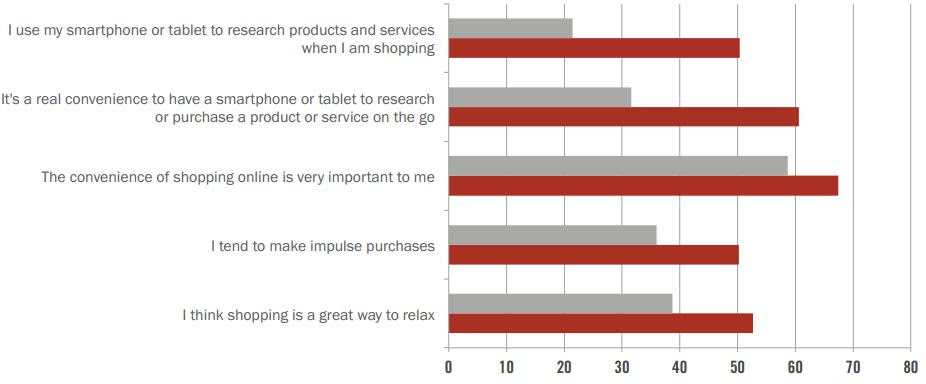
| Marketing to Millennials: Using Social Media to Turn Customers into Brand Ambassadors Posted: 28 Jan 2014 10:17 AM PST With purchasing power of approximately $170 billion per year, it's important for brands to actively target millennials. New research shows millennials, a generation totaling about 1.5 billion people worldwide and about 75 million in the U.S., will be outspending every other generation, including baby-boomers, within the next five years. Businesses are already falling behind on what is sure to be their biggest target demographic going forward. According to a survey of 121 business leaders in the retail world, approximately half of retailers are unaware of the buying power of millennials, 60 percent aren't conducting any research on millennials and more than a quarter wrongly assume that online advertising is the number one influencer of millennial purchasing activity. User-Generated Content When it comes to making big buying decisions, millennials are more likely to distrust companies, and instead rely on the opinions of friends, family and even strangers. They're more connected to the internet than ever before, meaning marketing strategies need to adapt to include social media marketing, SEO analytics, local SEO services and most of all, user-generated content. 84 percent of millennials say that user-generated content on company websites has at least some influence on what they buy, compared to 70 percent of boomers. In fact, there are many purchase decisions—big and small—that millennials won't make without reading consumer reviews including electronics, cars and travel accommodations. 51 percent of millennials say consumer opinions found on a company's website have a greater impact on purchasing decisions than recommendations from family and friends. 64 percent of millennials feel that companies should offer more ways to share their opinions online. Millennials want to be heard and hear what others have to say; and businesses who want millennials as a market need to keep in mind when thinking through their content marketing and digital strategies. Creating Brand Ambassadors Beyond having great products and utilizing advertising, marketers should strive to turn loyal consumers into brand ambassadors. But how does a marketer help make that happen? The first step is to make sure there are multiple places for brand ambassadors to share their opinions, and make sure those venues are easy to find. A company's social media presence must include a wide variety of social channels. Millennials are opting for social networks beyond Facebook for a variety of reasons. Marketers looking to make the most out of their digital portfolio should include Twitter, LinkedIn, Pinterest, Instagram and Google Plus. Marketers need to actively encourage loyal customers to share their thoughts. For example, Starwood Resorts encourages all of its travelers to not only review the hotel, but also nearby restaurants, activities and shops. The goal is to create an archive of content for customers to look at and use made by fellow travelers. Having a Twitter feed is a good first step, but brands should utilize the platform to answer questions, concerns and complaints. Companies like Ford, Home Depot, Whole Foods and Rubbermaid make sure to stay on top of their Twitter feeds and send personalized responses. Simply sending an automated response is not enough, and can even backfire. Responding to questions, addressing complaints and simply thanking newfound brand ambassadors is customer relations in the digital age and is simply essential if companies want to create repeat customers. Make Your Presence Known While it is true that millennials are still greatly influenced by traditional advertising, and do majority great deal of their shopping at brick and mortar locations, this big spending group is using a greater proportion of its dollars online than anyone else. 45 percent of millennials spend more than an hour each day looking at retail-oriented websites. This is proof that neglecting to include social media marketing and local SEO services as part of an overall strategy could lead to the loss of potential sales. More than 50 percent use their smartphones to research products or services while shopping. Every business should have a strategy for how to reach consumers on mobile and this merely reinforces that point. When it comes to search results, ranking makes a huge difference when it comes to clicks and sales. Brands that want millennials to find their business need to maximize their search engine ranking and optimize their website for mobile and local search. If a millennial can't find a brand online, they're less likely to spend a single dollar on a product, and no business wants to miss out on a chunk of $170 billion. ZOG Digital specializes in helping business create and grow their online presence to maximize their appeal to millions of potential customers. ZOG Digital is a local SEO company with experience in social media marketing and search engine optimization. Contact ZOG Digital today for all digital marketing solutions.  |
| Twitter Knows When You’re Depressed (New Study) Posted: 28 Jan 2014 09:42 AM PST Twitter knows when you're depressed, according to research. Simply by looking over your Twitter feed, scientists can predict – with 70 percent accuracy – when you're feeling sad and blue. The online social networking service, Twitter, was created in 2006. It allows users to post 140-or-less characters per tweet. The micro-blog Twitter has over 500 million registered users who post millions of tweets per day. According to the Los Angeles Times, the United States is number one as the country with the largest number of actively tweeting Twitter users at 24.3 percent. Based on available stats, we're immediately followed by Japan with 9.3 percent. Thus, with Twitter's broadening global prevalence, investigators have begun using the social platform in order to further public health research. Tyler McCormick of the Center for Statistics and the Social Sciences at the University of Washington explains in TIME, "Our attitude is that Twitter is the largest observational study of human behavior we've ever known, and we're working very hard to take advantage of it." One avenue of research is using study models – artificial intelligence and algorithms – to scan your Twitter feed to determine if you're at risk for depression. Co-director of Microsoft Research Redmond, Eric Horvitz and his colleagues pondered if it was possible to build measures capable of calculating and detecting if someone is severely depressed using social media posts. The research team developed a tweet scan model intended to predict depression in 476 Twitter users, 171 of whom were actually seriously depressed. They scanned profile histories going back a year – studying use of language, engagement and interaction, and key words regarding medications and mood. This equated to over 2.2 million tweets. The depression prediction study was 70 percent accurate when comparing depressed users' feeds with the non-depressed user samples. Investigators admit the process is still imperfect. Tweaks are still necessary in order to yield out the remaining 30 percent and adjust for false positives – the 10 percent of non-depressed Twitter users inaccurately gleaned from the scans. One interesting note from the research: When compared to emotionally healthy users, seemingly depressed Twitter users tweet between the hours of 9 p.m. and 6 a.m. [Image: Mike Bailey-Gates]  |
| Why You Need A Social Media Newsroom Posted: 28 Jan 2014 05:34 AM PST
How Social Media Newsrooms Will Improve Company Logistics By having a Social Media Newsroom available on a company website, common issues that arise when running a business can be eliminated. Company owners and management would be able to publish important news such as changes in business practices, upcoming events or current sales challenges; this would ensure that all employees have the latest information in real time. Company based social media newsroom will also allow employees to access information about other employees, eliminating gaps in project deadlines due to employees taking sick days; ensuring that business can proceed uninterrupted by unforeseen circumstances. Luftansa is a great example of using having a newsroom integrated as part of their website that includes, press releases, current features and Social Media channels. How Digital Newsroom Improve Client Interaction Having a company digital newsroom will allow clients to see your social media press release quicker than they usually would, adding to an increase in interest of new products and services. When clients see your upcoming news straight from your websites digital newsroom they will begin contemplating their need of your company's latest offering and how they can benefit from it. This can lead to direct sales ahead of schedule. Companies like My News Desk, Press Page, and Press Feed offer digital newsrooms, while Pressitt allows you to quickly create, publish and share your news online primarily through releases, they do provide free and fee versions for newsrooms.
How Social Media Newsrooms Can Help Your Digital Marketing When you have your entire workforce checking in daily on your social media newsroom, you'll give your company marketing teams an advantage in conducting digital marketing projects from remote locations. Additionally, you'll have traffic pulled to your site as your social media newsroom begins to show up in search engines, similar to Facebook and Linkedin. This will allow future prospects and customers, who otherwise wouldn't have seen your company, view your website. By being directed toward your websites social media newsroom, the other pages on your site will most likely be viewed. This can potentially turn visitors into new leads and possibly into new clients, greatly increasing the success rate of your company. Cisco's approach to this reads more as a listed release dates of news rather than a socially integrated approach. The success of any company is directly correlated with the ability to generate more leads that can be turned into an increase in sales. In order to succeed in this, companies need to operate smoothly; having employees that are up to date with current business news will ensure that each employee has an advantage in knowing the current trends that are taking place on a company wide level. Furthermore, having the ability to notify clients of upcoming news and events through digital press releases that are displayed on your companies digital newsroom will increase client interest, thereby improving the success rate of the sales department. (For more examples of newsrooms, check out My News Desk's Pinterest board.) While companies like Nissan, Kellogg, and Intel take advantage of this, there is no reason that small business owners and entrepreneurs can't do the same. Scaled down, there sites that may provide a similar effect of personal branding for solo-preneurs, and independent professionals who want to a establish themselves online in a more robust way. Rebel Mouse is probably the most notable. It can integrate your Social Media feeds, website among other options to give an overview of where you are and what you post online. Another recommended site is Newsle, which acts as more of an online "clipping" service collecting mentions of your name when published online, and one that can be self-curated.
Some Starting Points for Your Newsroom If you are thinking about creating an online social media newsroom for yourself, (and I highly recommend that you do), here are some good tips and starting points and best practices. To give you an idea of what may be included in a Social Media Newsroom, check out the template created by Shift Communications. Although when this was initially introduced in 2006, a lot of this is still relevant today.  |
| Can Social Media Actually Produce Leads and Sales for B2B Businesses? Posted: 28 Jan 2014 05:14 AM PST Social media for B2B, a waste of time or an untapped source of sales? Is it really worth the investment? A recent study by the Content Marketing Institute (CMI) and Marketing Profs uncovered that social media is used by 87% of B2B content marketers, making it the most popular marketing tactic. However, social media also has its skeptics. It is undeniable that social media has been successful for several businesses. A compilation of social media statistics last year highlights research by Social Media Examiner, which shows that:
However, many still question the effectiveness of social media and its ability to deliver a Return on Investment (ROI) for B2B businesses. Despite the popularity of social media in the industry, the CMI study showed only 49% of marketers rate social media as effective or very effective, making social media the least effective marketing tactic. The chart below shows the confidence gap in social media. Now, on to the burning question: Does social media produce a ROI for B2B businesses? Yes and no. You see, cocial media can deliver ROI, but only if it is done in the right circumstances and with the right support. There are 5 main factors to consider: 1. Your target audience’s buying behaviourAny marketing campaign will not be successful without a thorough understanding of the buyer. Before you leverage social media, you must develop your buyer personas. Within each persona, you must identify the problems they face, the needs they have, their interests and their buying behaviour. With this understanding of your buyers, you can determine whether social media is an appropriate medium to communicate with your target audience. Once it is deemed suitable for your market, social media will have a better chance of delivering ROI to your organisation. However, it is important not to assume that your target audience is not using social media. Base this decision on research. You will be surprised what LinkedIn groups and Google+ communities there are out there! 2. An end-to-end marketing campaignWhen leveraged without a proper strategy to support it, social media cannot be effective. Therefore, it must be incorporated within an end-to-end marketing campaign. Equipped with a thorough understanding of your buyers, you should have enough knowledge of your prospects buying cycles to develop this end-to-end campaign. The campaign must outline all the tactics to be leveraged by the organisation from top-of-funnel (TOFU) stages ( raising awareness and generating leads) to bottom-of-funnel (closing the sale). This understanding of your buyers' journey will inform how social media fits within your marketing plan. When social media is leveraged as part of a full fledged plan focused on business growth goals, you will have a better understanding of how it is contributing ROI and a far more focused execution. 3. The objectives for using social mediaIt is crucial to develop a clear purpose statement and a set of objectives for your social media activity. Then, go deeper and identify the objectives (in numbers and $) that you plan on achieving with social media. As with the above, set an objective for every social media channel you plan on using. It is only when you have these clear objectives for social media that you have benchmark to measure against. 4. Relevant, engaging contentSocial media, in itself, will not deliver leads. Arbitrary updates on LinkedIn or Twitter and promotional updates probably result in negative ROI. For social media to deliver leads and sales, it must be supported with a sound content marketing strategy. This strategy cannot be based on what you or your business wants to communicate (common fail). It should be derived from your buyers needs for information. Listen to your buyers problems and needs to determine the topics that are most relevant to them. Your social media content will then contain topics that are of interest to your buyers, and content pieces that will truly engage them, meaning you break through the noise made by all your competitors shouting about how great they are. Engaging content will progress your buyers to the next stage in their buying journey, present you as a trusted source, raise awareness of your brand and ultimately, deliver an ROI. 5. Constant measurementMeasure everything! Measurement should be compulsory in every business, for it is the only way you will be able to determine effectiveness or ROI from any marketing campaign. There are several social media management platforms that come with analytics features, helping you see how successful you are in engaging with your buyers. These tools show you how many people have followed you, how many people re-tweeted your update, how many readers have commented on your blog and linked through to your website to name a few. Analytics can show you the real numbers of the leads generated, progressions made and sales closed as a result of social media. With analytics, you will see how social media delivers ROI for your business. Ensuring you have goals and a strategy for achieving those goals, social media can be your business’s main source of lead generation. Without this you can waste time and money. To learn how to better measure your marketing ROI, refer to our free eBook below:  |
![Prison Inc.: The Secret Industry [Infographic] image private prisons2](http://cdn2.business2community.com/wp-content/uploads/2014/01/private-prisons2.png "Prison Inc.: The Secret Industry [Infographic]")



 There are several aspects to personal social media that has the potential to push businesses into the future, regardless of company size. An immense amount of networking is already performed through personal social media, however in the business realm it would create a company asset that business partners, employees and clients could take advantage of. Imagine a world where full contact details were available for each person in your company, add to that a social media newsroom where every aspect of the inner workings of your company were readily available for employees to review and initiate into their day to day business strategies.


| You are subscribed to email updates from Popular Articles | Business 2 Community To stop receiving these emails, you may unsubscribe now. | Email delivery powered by Google |
| Google Inc., 20 West Kinzie, Chicago IL USA 60610 | |
