Popular Articles on Business 2 Community |
- The 10 Most Common On-Page SEO Gaffes
- The Real Reason Why You Hate SEO – You Are Lazy!
- Starting Up: Content Marketing for Brand New Companies
- How To Amplify Your Personal Brand Through Thought Leadership In 2014
- Looking Back: Social Media Numbers in 2013
- Positive Employee Engagement Enables Great Customer Experience
- The Three Ps of Creating Content Marketing: Punctuation, Polish, and Power
- Customer Service Is Everything (Infographic)
- Keys to Being Social: Authenticity
- How Smart Marketers Are Winning With Email Marketing
| The 10 Most Common On-Page SEO Gaffes Posted: 02 Jan 2014 07:11 AM PST What are some common SEO Mistakes to avoid?
Here are some common On-Page SEO Mistakes to avoid1. Not Having Unique Title TagsYour title tag is the title of the page that shows up in the search results pages as well at the top of your browser. If your website has the same title for every single page, you're missing out on some valuable SEO real estate. The title tag should explain to the visitor what the page will be about. And your title tag should have your keyword phrase in it. (If your webpage was a filing cabinet, your title tag would be on the outside explaining what's on the inside.) 2. Having Title Tags that are too long…On the search engine results page, there is a limit to how long your title should be. If you have ever seen how Google truncates or cuts off titles that are too long with a simple "…" Many people say to keep it below 70 characters but search engines use pixel width to determine when to cut off words. If your title tag is too long, its useless since the visitor won't even be able to see it. Best practice is to try to keep your title tag to about 65 characters so it won't get cut off. 3. Not Having Unique Meta DescriptionsFar too often I see clients websites that use the exact same meta description for every single page. The meta description is not a ranking factor but rather a quick sentence or two about what information the visitor will find on a page. You might look at it as a quick sales pitch to get visitors to click on your site. The meta description should be written in readable form with your keywords as close to beginning as possible. 4. Having Meta Descriptions that are too longJust as the length of you title tag is important, the length of your meta description is also important. Try to keep your meta description to about 156 characters to keep it from getting cut off. Many websites that I work on have meta descriptions that are longer than the page content. It does no good since the visitor will never see the part that gets cut off. 5. Not having H1 tags or having too many H1 tagsYour h1 tag is your page header tag that helps define what your page is about. A page without an h1 tag is just like a filing cabinet without files in it. A properly written h1 tag is one of the most important page elements to help with search optimization. The h1 tells the visitor and search engines what the page is about. It should support and be relevant to your title tag without saying the exact same thing. (If your webpage was a filing cabinet, your h1 tag would be the green dividing folder that helps you find what you're looking for.) 6. Not using h2-h6 header tagsWhy should I use h2 tags? Well, h2 tags not only help break up your page content to help a visitor skim your page to find the information they need, it also helps search engines define what your page is about. Best practice is to use no more than six, h2 tags per page. (If your webpage was a filing cabinet, your h2-h6 tags would be the manila folders that help you find what you're looking for.) 7. Having links to pages that don't exist (404 errors)When we run our free SEO audit for clients, we crawl each page looking for broken links and 404 errors (page not found) When a search engine spider crawls your site, hitting these dead ends causes them to turn around. Having too many 404 errors sends a signal that this site may not give visitors a good experience. Why would these errors even exist? Well, usually it's because there is a link that points to a page that has been moved or deleted. Fixing the links to point at the proper (or new) page is the first step. Then taking the URL that no longer exists and 301 redirecting it to the proper page is ultimately what needs to be done. 8. Having poor content on your siteYou've spent time and money building your site, making it user friendly and optimized for search engines then put up poor content that doesn't give the visitor anything valuable. It would be like opening a filing cabinet, finding the right folder you were looking for and there isn't much inside. Great content provides the visitor with a better experience. 9. Not having a XML sitemapOf course, search engines can crawl your site link by link without the need for a sitemap, but having an XML sitemap makes it much easier for them. Creating and submitting an XML sitemap for search engines helps them easily discover every page of your site. There are plenty of programs to help you do this but here is an easy free XML sitemap generator to use. www.xml-sitemaps.com 10. Not having social sharing buttonsYour site is awesome and people want to tell others about it but not having social sharing buttons makes sharing your site more difficult. Adding social sharing buttons allows people to spread the word about your awesome site. While there are quite a bit of other details that go into a perfectly optimized page, fixing these 10 common on-page mistakes will certainly give you a head start.
image credit: tim seed/freedigitalphotos.net |
| The Real Reason Why You Hate SEO – You Are Lazy! Posted: 01 Jan 2014 06:50 PM PST This is going to be a bit of a controversial article but sometimes you need a good kick in the teeth to get back on track and doing the right thing by your business. Often people are looking for the 'short cut' to success, especially when it comes to Search Engine Optimization. That's why things like link farms, blog networks, link networks and link exchanges exist. They are catering to the lazy internet marketer or business owner looking for the quickest, easiest way to the top of the search engine. But ultimately this is the wrong approach, not because it will fail, but because it's the wrong mentality to start with. Think about it like this for a moment; If you want to become 10 pounds lighter there are really only 3 ways to do it. The first way is surgery. You can have liposuction and have the fat literally sucked out of your body and in just days you've lost the weight. The problem with surgery is though just months later you can have all that weight back because you haven't dealt with the core problem. The core problem is you are eating too much and not exercising enough. Which leads us to the next two ways of actually losing weight. Exercising and reducing your intake of food. Both are harder, take longer and take commitment from you. But in the long term the weight is more likely to stay off and it's a healthier way of losing weight. SEO is no different. There are quick, surgical ways of shooting up the search engine rankings, which will get you almost instant results. But those results will be short lived as your site falls back down and Google catches up with you and the short cuts that you took. If you really want to rank well on Google then you have to be willing to put in the hard work, take those extra steps and skip past the short cuts. Content is king. Give Google what it wants and in turn you'll get what you want, stop being lazy and realize that SEO is simple, it's just you who are making it hard! |
| Starting Up: Content Marketing for Brand New Companies Posted: 01 Jan 2014 12:30 PM PST
Launching a brand new startup company is a difficult thing, even for the most disciplined and passionate entrepreneur. One of the toughest things about it is marketing the new company. After all, a brand like Coca Cola has decades of consumer goodwill and name recognition to fall back on; Google has everyday ubiquity to leverage. How do you market a company, though, when it's only recently launched, when its name is unknown and its products or services still little-understood? Content marketing is certainly an important part of the process. Since content marketing is all about educating, informing, and empowering consumers, it's really a natural fit for startups: Content marketing allows you to educate your potential customers about what your brand is, and how your products or services can benefit them. How to Do Content Marketing for a Startup The question is, how can an entrepreneur—with a relatively packed schedule and a small budget—really take advantage of content marketing opportunities? Here are a few tips and best practices:
Launching a brand new company is no easy thing—but strategic content marketing can help you get off to a strong start! The team at Grammar Chic specializes in a variety of professional writing and editing services. For more information about how we can help you, visit www.grammarchic.net or call 803-831-7444. |
| How To Amplify Your Personal Brand Through Thought Leadership In 2014 Posted: 01 Jan 2014 08:07 AM PST
Here is David Brooks of "The New York Times" making fun of thought leaders: The Thought Leader is sort of a highflying, good-doing yacht-to-yacht concept peddler…Month after month, he gets to be a discussion facilitator at think tank dinners where guests talk about what it's like to live in poverty while the wait staff glides through the room thinking bitter thoughts. To which we can only say, "Bah humbug." Done correctly, thought leadership is a valuable way to brand yourself and your company. It allows people to feel comfortable with your firm even if you're a small business in your industry and not the market leader. After all, if you had a choice to buy a pricey electronics gizmo from a no-name company or one with an established name, who would you buy from? What Is Thought Leadership?Now I know I am opening myself up to the thought leadership protection brigade but here goes: Becoming a thought leader in your industry doesn't mean that you're necessarily the smartest kid on the block. Or even the most knowledgeable. It does mean that you're the most receptive and understanding of your customers' needs. And strategic and tactical in educating customers and prospects. One of my favorite thought leadership examples is that of Marcus Sheridan, who seemingly arose from nothing to become a web and content marketing maven and motivational speaker. Google his name and you'll get a mere 5 million results. Sheridan, an owner of River Pools and Spas, was hitting a rough patch in 2009 and had overdrawn the company's bank account on three consecutive weeks. Realizing he needed to do something different, he started blogging. He didn't just blog to blog but answered customers' questions strategically—answering the biggest questions they had—or at least posing the questions—thereby securing top rank in the search engines for the answers to the questions most on customers' minds. Suddenly, River Pools was the authority on fiberglass pools. His approach has worked with revenues now exceeding what they were before the downturn and Sheridan hailed as a web marketing guru. Now, Sheridan is an extreme case; most of us are not going to become as well known—nor do we necessarily need to be—to succeed. However, you can distinguish yourself in your respective field and go from, as we like to say, "anonymity to the 'New York Times.'" Enhancing Your Personal Brand through Thought LeadershipReady to enhance your personal brand through thought leadership? Here are 11 ways to help you do just that: 1. Develop and tell a coherent, compelling story: What makes your company (or yourself) tick? How do you delight your customers? What sets you apart from the pack? 2. Get on the podium: Getting yourself on panels at industry conferences is one of the best ways to gain attention and attract decision makers. 3. Assess your content marketing strategy: Develop articles, blogs, columns, videos, and other content platforms that educate and speak to customers' needs while establishing your expertise. 4. Follow influential journalists, bloggers, and thought leaders on Twitter: Develop lists of key reporters, editors, bloggers, and industry thought leaders; follow them, engage with them, and retweet their posts. 5. Don't just tout your product or service: Develop key messages that answer the question: Why should anyone care? Pro Tip: Don't think about why you care, but why your customers care. 6. Talk in plain English: Avoid obscuring your message by using industry jargon and talking "inside baseball." 7. Tell an exciting story: Use compelling elements such as data, visuals, and infographics to illustrate your points. 8. Be newsworthy: Tie what you're doing to something happening in the news —especially if it's in your sector or a target vertical market. Pitch your article to business and trade publications. 9. Get others to tell your story: Gather and promote testimonials, case studies, and white papers from partners and clients. 10. Expand your circle of influence: Don't just limit yourself to a blog post. Tweet about it. Create a video addressing some of the questions. Post in other social media channels. You want to be everywhere your customer and prospect is. 11. Curate content: Provide a quick synopsis of articles in your industry. Post links to the articles in social media in addition to blogging about them. Are you ready to make the leap from anonymity to thought leader in 2014? I look forward to hearing your thoughts. Please post your comments in the box below. |
| Looking Back: Social Media Numbers in 2013 Posted: 01 Jan 2014 07:40 AM PST
Social media networks have emerged as a powerful force in recent years, and most of us are far from strangers to the fact. But as we look back at the year just passed, we see that just like technology, social media is changing. It's no longer limited to heartwarming status updates, personal photo ops, and riveting autobiographical installments. These days, social networks are considered an effective tool to drive commerce and, perhaps more importantly, an increasingly popular service on various mobile apps. In a nutshell, social media means business. So, just how powerful is social media on mobile? Herculean, it turns out. Over 4.2 billion people worldwide access social media via their mobile devices. This means that virtually every mobile device on earth is used as a gateway to social media channels. And that's only the beginning. Let's have a look at some additional facts and figures about the leading social networks in the western world and how they panned out on mobile in 2013. The social media giant that dominates the social network arena is also (surprise surprise) the most popular app of all times. A staggering 751 million people access Facebook from mobile devices, accounting for roughly 65% of all Facebook users. This surge in the percentage of mobile users also contributes to the growing usage frequency stats—one in four Facebook users check their account more than five times a day. Kudos, Mr. Zuckerberg… Any app that logs those kinds of numbers is clearly leveraging mobile to the max. What's more, the Facebook domain has become a stepping stone to stardom for many a business. Thanks in no small part to its ubiquitous connectivity and regularity of user logins, Facebook has hosted over 10 million apps, many of which have attained viral popularity and generated impressive revenues. A good number of these apps went on to become native mobile apps in their own right, contributing to the exponential growth of the app industry. And it's not just about the big hitters—Facebook holds immense potential for small businesses as well. Just ask the residents of Obermutten, a tiny village in eastern Switzerland. Thanks to their unique, if not ingenious campaign that offered to post a picture of every Facebook fan on their wall, they created a social buzz that increased visits to their tourism websites by a whopping 250%. Yet another addictive social networking phenomenon that keeps a gabby generation of on-the-go users routinely engaged. Giving the folks who brought us Facebook a run for their money (they can afford it…), more than 60% of Twitter's 500 million+ users access the service from mobile devices. We're talking over 400 million tweets sent every day across the globe. Twitter also manages an enviable Active Users/All Users ratio: over 55% (288 million and counting) of Twitter users are regular tweeters. The secret to their prosperity? It's hard to say exactly, but smart promotional tactics, for one, don't hurt. Twitter's memorable campaigns and marketing strategies have become the talk of the digital town. Take Oreo, for example, the first responder to the great Super Bowl power outage of 2013. The cookie baron's brilliant knee-jerk reaction to the blackout—"You can still dunk in the dark…"—generated 12,000 retweets within two hours of its launch. And it doesn't end with Oreo. This case study demonstrates Twitter's prodigious success as an established immediate-response service. To add glamour to glory, the company is no less renowned for its epic long-term media awareness campaigns—Exhibit A: Batkid. LinkedIn The Vestas energy campaign, one of the biggest and most diverse of its kind to be launched on LinkedIn, established the company's advantage as a superior branding solution for any business. Finally, a mobile social network created specifically for mobile. And loyal fans will be delighted to know that the photo-and-video-sharing network continues to thrive well into its 2012 $1 billion Facebook acquisition. With a remarkable 900% year-on-year growth record, Instagram now has 130 million users, with over 5 million photos uploaded every day. And as if Instagram's servers didn't have their hands (or clouds…) full, they field something like 1,000 comments with every passing second. Just as noteworthy is the fact that the service allows companies to enrich their brands with values that fit. To fully and properly grasp the power of Instagram, for example, just take a look at Red Bull's extreme-sports page or Adidas's auxiliary site for original and new merchandise. Huge engagement, commendable user satisfaction, and above all, definitive proof that mobile will ultimately become the top digital platform around. Tip of the iceberg, as they say, but a word limit is a word limit, and we prefer our readers make it to the finish line awake. There are countless other social networks at large, including the Asia-dominant Qzone, Google+, and Tumblr, to name a few. To cap off, here are some industry leader stats.
These networks use their size to generate considerable revenue from advertising, as demonstrated below.
So as you bid your final farewell to 2013 and welcome its successor with vigor and resolve, keep this in mind: given the numbers, one thing's for sure: if you're a business venturing into mobile in this day and age, you have to embrace the enormous impact of social networks. Harnessing the power of social to keep your business in the forefront is not a mere recommendation anymore—it's an absolute must. Take it away, and have a healthy, happy, and prosperous 2014! This post was contributed to The Conduit Mobile Blog by guest blogger Jonathan Raveh. Jonathan is the Director of Publishers at Appnext, a growing monetization and discovery network for mobile and social media. He also writes for TheMarker (online edition) and is the publisher of Mobilize, a mobile-oriented news and business blog. |
| Positive Employee Engagement Enables Great Customer Experience Posted: 01 Jan 2014 06:30 AM PST Consistently delivering an exceptional customer experience requires creating employee engagement and culture that cultivates positive service actions.
Consistently delivering an exceptional customer service experience is critical to the long term success of your organization. Only through consistently delivering on the key expectations your customers have can you expect to begin to see customers reward you with long term loyalty. Until you achieve that sacred level of customer loyalty, you leave an open invitation for competitors to steal away your customers. The revolving door of customer service prevents the positive customer experienceBut maintaining consistent service levels can be difficult when you're operating a revolving door on the customer service call center floor. In order to make customer service consistent and effective, you need expert and tenured customer service team members. That can be difficult when employees are frequently chasing jumping between job opportunities. In a recent article titled, Hiring employees who are more loyal, Josh Tolan, CEO of Spark Hire, a video-powered hiring network that connects job seekers and employers through video resumes and online interviews, discusses the difficulties that many organizations today have in keeping qualified, expert employees. Josh does a great job identifying some of the requirements that every organization must have in place so that great employee engagement can take place. Getting long term employee engagementAccording to the U.S. Bureau of Labor Statistics, the average employee tenure is now about 4.4 years. For millennials, this stay is even shorter at only about 2.3 years. So it should come as no shock 91% of Millennials expect to stay in a job for less than three years. It's difficult enough just getting millennials excited about doing customer service work in the first place, keeping them long term is an even greater challenge. Keeping customer service agents for the long haul is often more a function of cultural fit, than technical job function. Consistently delivering an exceptional customer experience requires creating employee engagement and culture that cultivates positive service actions. A study showed 46% of small-business new hires failed within 18 months, and shockingly, 89% of this failure was attributed to poor company culture fit. At DigiCert, we use resumes and applications to confirm qualifications. The in-person or video interview is more of an audition to ensure that the individual will be a cultural fit, rather than more traditional technical qualification review. How to improve employee engagementIt takes more than employee engagement activities, games, and food at work. An employee engagement strategy needs to be developed to clearly identify who are your employees and what they need to successfully feel like their time at work is more than just another job. By creating a positive work environment, treating employees impeccably well, and getting them engaged within their team and the mission of the organization, we've been able to retain millennials much, much longer than what the statistics say is normal. It helps that we preach, teach, live, and breathe customer service. We back it up by enabling our team members to act in the customer's best interest and empower them to take actions they feel is best for each customer situation. I think that much more can be done today to make workplaces a better place to work and improve the employee experience. From my experience I've seen a directly seen a correlation between the employee experience and the customer experience. So what do you think? What are some ways you hire loyal employees? Can you effectively create the right motivators to keep your best people long term? |
| The Three Ps of Creating Content Marketing: Punctuation, Polish, and Power Posted: 01 Jan 2014 05:30 AM PST
With so much emphasis on creating content marketing, it's no surprise that some marketers are producing less than quality content. This statement is not an attack on marketers. Rather, it's an honest assessment of what this marketer (yours truly) has observed during the past three years. Said another way—it's noisy out there! Creating Content that Stands OutMuch has been written about the importance of developing personas for your target audience and creating content for each persona across their buying cycle. While I agree that is very important, I wish to stress the importance of the 3 Ps in content marketing: punctuation, polish and power. PunctuationI choose this word as the umbrella phrase to describe the importance of a well structured story that accomplishes the intended goal of the content producer. Have you ever watched a short video from a brand and walked away asking—what was the main point? I can make the same claim of written content. I'm shocked when I read a 1000 word article that doesn't clearly make a compelling point. Any content asset, whether it's an article, a video, an infographic, etc., needs to clearly articulate a purpose. Of course, it needs to be grammatically structured too. More importantly, it needs an old fashion introduction to the main point, an explanation of the main point, and a take away summary of the main point. PolishWe live in a hyper fast, hyper competitive world. The average time a user takes to decide whether to stay or bounce on any page visited online (desktop or mobile) is less than five seconds. Whether you like it or not, as (former tennis star) Andre Agassi use to say "image matters." The overall polish of your content assets really does influence visitor engagement. Subconsciously, a visitor to a content asset is immediately turned on or turned off based on its appearance even before they consume your content. That means all elements of your content need to be polished. The selection of images including their size, their resolution, and their placement—all matter. The layout, formatting, and overall presentation of your content matters. If you think because your content might be targeted to very technically savvy consumers who (presumably) don't care about polish, you're mistaken. Said another way, the first impression of your content is important enough to keep the consumer engaged long enough to consume it beyond the headline. You only have five seconds to convert a visitor to a consumer of your content. Deliver polished content. PowerCreating content that is powerful is closely aligned with "punctuation" but distinct enough to warrant its own "P." Each content asset you create must have a compelling take away point. While it's not necessary for a 500 word blog article to revolutionize your industry, it should cause the reader to have a reaction. The litmus test for "power" in your content is: did you cause the consumer of your content to think differently about a topic? This doesn't mean that you must change someone's opinion on a topic. But, it does mean that if, for example, your blog post offers a technical explanation to how a chemical is used in a scientific application, did the reader say "I understand that better than I did previously, and consequently it may affect my life in some way." Translate this litmus test into your content strategy. What powerful response do you want to cause from the consumers of your content? The Three Ps of creating content marketing are the closest thing to a formulaic approach to what is otherwise not considered a science. But maybe it's time that we as marketers embrace the fact that marketing has in fact become a science. |
| Customer Service Is Everything (Infographic) Posted: 31 Dec 2013 03:57 PM PST For the most part, one bad customer service experience is one too many, and we’ve got the stats to back it up. Even just a single unhelpful customer service representative can send consumers over to competitors without a second thought. The average dissatisfied customer is likely to tell more than 20 people about their bad experience and will likely cease doing business with that company. So if customer service is such an important part of business, why do so many corporations seem to fall short in that department? Just 26% have well-developed plans for improving the quality of their customer service. We see time and time again that as an enterprise grows, its customer service department becomes less and less effective. Compared with one another, the customer satisfaction ratings of specific companies that many of us deal with daily might surprise you. Heading off in the personal computer department is Apple with 87% customer satisfaction rating, one of the highest on our list. But Apple’s iPhone 5 falls behind Samsung Galaxy Note II and Galaxy S III in smartphone manufacturing. Verizon is currently the top rated wireless provider with a satisfaction rating of 73%, while T-Mobile is at the bottom with just 68%. As a whole, however, customer satisfaction in a variety of industries seems to be on the rise. In the past year alone, health care, energy utilities, transportation and accommodation & food services have all gone up and average of 1 point.
Take a look at this infographic for the state of customer service and let us know in the comments, are you satisfied? Don’t forget to like and share! |
| Keys to Being Social: Authenticity Posted: 31 Dec 2013 03:30 PM PST  8 Authentics by Corinne and Authentic, Honest to God, True & Genuine, by Candice by daemonsquire Authenticity. What is it? We hear it tossed around as an attainable attribute but how does it affect our social media strategy? How does it alter our online behavior? Being authentic, or the role of authenticity, is a concept that has been used and abused like a favorite sweatshirt. It may be comfortable but it's full of dog hair. According to Merriam-Webster, the fifth definition of authentic is "true to one's own personality, spirit, or character." "Authentic." Merriam-Webster.com. Merriam-Webster, n.d. Web. 30 Dec. 2013. The fact of the matter is that our behavior both online and off affects whether we are perceived as being authentic. Authenticity and RudenessThis must be addressed straight out of the gate. You should not, in the name of authenticity, think it's okay to hurt other people's feelings. This happens both online and off. "That lipstick looks terrible on you. Just being honest." Seriously, people use "authenticity" as an excuse for rude comments. If you're not convinced, your extra credit assignment is to watch this video by Derek Sivers: "A real person, a lot like you." You can be a helpful person on social media by giving constructive criticism and it can resonate as authentic. You both can and should edit your comments. Inhibition is what saves friendships. Authenticity and First ImpressionsI rarely meet new people on any platform other than Twitter. When I come upon a new follower or person during a Twitter Chat or recommendation from a mutual friend, I check out their profile. Just like in real life, first impressions count. If, for example, the account solely tweets from Facebook I presume they rarely, if ever, check their Twitter account for mentions. Why bother following? If their avatar is an egg or if they have a risque biography, they are most likely spam. The same red flags we have in real life can be applied to online behavior. As Rommel Anacan says in his post "Would you wear a 'snuggie' on a first date?" But I ask you…are any of you rockin' the "Snuggie" on a first date? Are you sporting the grey sweats from Wal-Mart and the fleece boots when he knocks on your front door? Are you wearing the red flannel shirt that you love, but is seriously ten years too old? Of course not! (At least, you shouldn't-BTW.) Then you shouldn't do the same at work. It's not a breach of authenticity to dress to impress. The same goes with our words. Authenticity and PersonalityIn real life, the first impression is made at the moment you first encounter someone. Online it's with a new follow. Many people believe, and I tend to agree with Stacy Garcia and Amy Donohue, that to be authentic on social media your personality needs to shine through. This can be a challenge at first. Like any writer, finding your voice takes time and practice. Yes, Tweeting is writing. You have to be concise and interesting in only 140 characters. Personality endears you to people and makes you stand out. Stacy Garcia makes a great point. The test of your authenticity online is when the relationship moves offline. We meet in person and there are no surprises if authentic.— Garcia Cabinetmakers December 31, 2013 Your online behavior matters, which brings me to scheduling tweets – a heated debate more often than not. Authenticity and SchedulingIn the much debated subject of automating tweets, Scott Stratten says: "There is no such thing as automated engagement. There is no such thing as programmed authenticity." Mannequin Networking: Why Twitter Automation is Bad On the flipside, I went to Syed Balkhi's Time Management talk this year at WordCamp OC. He lives by Buffer and other scheduling apps. His approach makes sense, too. .@Carol_Stephen got a photo of @syedbalkhi ‘s toolkit. #wcoc #timemgmt http://t.co/Q6T932BY05— So what's the big deal anyway? Why should you care? Here are some potential problems with scheduling tweets.
Everyone has schedules, meetings, and offline times. We get that you're busy. There has to be some middle ground. There is a hybrid approach that is authentic. I've come to the conclusion that it's best that I only schedule tweets for the day and only when I'll be online checking for responses. That's a great compromise. Authenticity and Programmed ResponsesDid you know that you can automate retweets? I stumbled upon it because an account was not only retweeting conversation fragments but when I finally called them out on Twitter, they retweeted that, too. This is inauthentic and poor branding for so many reasons. Seriously? If you have so little time to retweet things from your lists or home feed (better with a comment), then maybe Twitter just isn't for you. Yes, I said it. Maybe you should quit Twitter altogether. Authenticity and BrandingFrom a branding perspective, authenticity is what differentiates you from the other guy. A little bit of personality, your manners, the way you engage with your audience all build your identity. If there is a difference between your audience's perception (branding) and reality (poor customer service, ignoring tweets), you may be labeled as inauthentic. There is a plethora of blog posts about social media fails. This is just the layman's way of pointing out inauthentic behavior. Authenticity and HumanitySocial media is social. That is a basic fact that will never change. And it's true there are only 24 hours in a day, 60 minutes in a hour, and so on. Time is a precious resource we often take for granted. But should our relationships suffer to save a few seconds? At what point does automation dehumanize us? True, deepened, and connected relationships are key to our sense of humanity and belonging. All of us, by biological default, want to be recognized within our social groups. In fact, "love and belonging" ranks third in Maslow's hierarchy of needs. All of us want to fit in. We all crave attention and purpose. At some point, in order to stay authentic we'll have to start treating social media as the place where we can find connectedness in the moment. In real life, when someone asks us a question at the dinner table, among friends, or at a networking event, we only have mere seconds to reply before the moment is lost, interest is lost, and the subject is changed. Yet, on social media, we feel that it is okay to wait for days to reply to people or never respond to them at all. Authenticity DefinedI published a tweet asking folks to define authenticity; here are some of the responses I've received. #AuthenticityDefined for me means you can see the person’s “voice” in tweets, and it’s consistent.— Be “present” for real conversations; You are not a robot! Attempt to help others whether it helps yourself or not. #AuthenticityDefined— #AuthenticityDefined @YouTooCanBeGuru Our actions (posts, tweets, blogs, etc.) embody & define our authenticity.— Be genuine; Project a truthful picture of yourself in your social media efforts; Be real #AuthenticityDefined— Don’t be afraid to automate posts, but be sure to reply to any responses. Care about the conversation. #AuthenticityDefined— Authenticity and YouWhat do you think? Am I wrong? Sound off in the comment section |
| How Smart Marketers Are Winning With Email Marketing Posted: 31 Dec 2013 05:00 AM PST
They Consider Smartphones in Their StrategySmart email marketers know that 88% of people check their emails daily on a mobile device, and they optimize accordingly. But this means more than designing mobile-friendly emails. It means considering the increasing probability of calls from mobile devices to your business, which means you need to have a phone number in your marketing emails. Marketers with successful email strategy are using click-to-calls to address the needs of mobile users…and getting great results. They Design More Conclusive A/B TestsEvery smart marketer knows that in order to do what works, you need to know what's working. This means extensive A/B testing on subject lines, calls to action, etc. to increase email campaign conversion rates. But marketers who are serious about success don't stop with open rates as the deciding factor for an A/B test winner: they look farther down the funnel at clicks and conversions, and this means measuring all things measurable, such as registrations, downloads, demo requests, phone calls, and more. Measuring phone calls from email marketing gets tricky, but the reason marketers who are doing email right are able to claim the leads they generate is because they know how to track them and they factor calls into their A/B testing. In many cases, a prospect gets an email, goes to the landing page, and then calls the business. For too many marketers, the ability to measure that lead disappears, and so does the accuracy of their A/B test. If you want to keep up with the winners, don't lose your leads. They Provide OptionsSmart marketers know not to give too many calls to action at the risk of confusing the recipient and decreasing chances of conversion. But providing prospects with the option of contacting you via phone or form is something every marketer should do, especially given the rise of mobile. Email marketing doesn't always stay online, and the marketers who see the most success with their email campaigns know this better than anyone. These are only some of the ways that smart marketers are gaining significant value from their email marketing campaigns. Want to learn more? Download our free guide, the Definitive Guide to Call Tracking for Email Marketing now. |
 That is a great question and is probably the most common question that I get asked by friends, family and clients. First off, search engine optimization isn't brain surgery or quantum mechanics, it's hundreds of little details that align to make a bigger picture. Many people spend tons of time and money into building a beautiful website that is responsive and useful to visitors but then quit fine tuning the details.


 It is all too easy to misunderstand the concept of thought leadership and how it relates to your personal brand. People often mistakenly think the word refers to some sort of wunderkind on the order of a Steve Jobs or Jack Welch. Or they belittle the concept as some type of hollow, self-promoting blimp.


 Once upon a time, employees would often stay with companies for their entire working careers. Now, employers are lucky to keep workers longer than a presidential election cycle.
 The marketing department has evolved from a focus on advertising designed to grab attention, interest, and action to a focus on building trust through delivering and creating quality content. The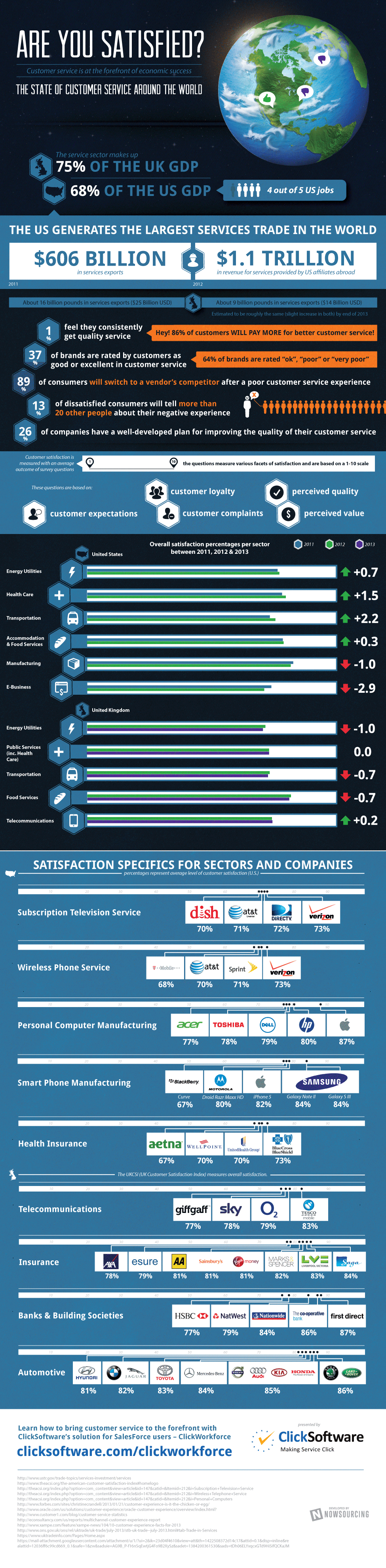

| You are subscribed to email updates from Popular Articles | Business 2 Community To stop receiving these emails, you may unsubscribe now. | Email delivery powered by Google |
| Google Inc., 20 West Kinzie, Chicago IL USA 60610 | |
